

Categories

Print: Mixmag


This Man Wants to Sell You Legal Ecstasy

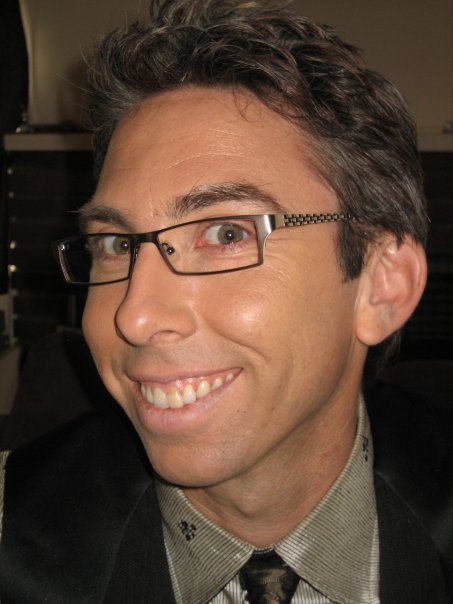
MixMag article featuring Spiritual High’s New Zealand based manufacturer Matt Bowden
Words: Lizzie May
© Mixmag 2006 www.mixmag.net

“Legal Highs” used to mean paying £15 for a bad headache. But this New Zealand entrepreneur has sold 20 million doses of a new ecstasy substitute that works. Can former musician and recovered junkie Matt Bowden bring his legal pills to Britain? And are they safe?

Matt Bowden knew that the panel of serious-faced pharmacologists toxicologists and emergency doctors had no idea what to make of him. After all the former musician – dressed in a suit that appeared to be made from tablecloth – was trying to convince these government advisors to allow him to supply drugs to New Zealand’s addicts. No matter what misgivings the committee had, Bowden was determined to sell them his idea – tackling New Zealand’s spiralling methamphetamine problem by introducing his own ‘safe’ party pills.

In 1999, New Zealand had already accepted the concept of harm minimisation in drug use, and the government was desperate to contain the methamphetamine explosion and accompanying surge in violent behaviour. Bowden had created pills called Nemesis, using benzylpiperazine (BZP), a non addictive, euphoric stimulant. All he had to do now was win over the Expert Advisory Committee on Drugs and to make it through the Select Health Committee process, where everybody in the community had their say on his plans. Remarkably, he was successful and New Zealand introduced a new drug categorisation – Class D – for lower risk substances deemed not harmful enough to be illegal.

Fast forward to 2006 and the BZP pills have not only helped addicts but become a commercial success, with many imitators. Around 20 million tablets have been consumed in New Zealand with no reported fatalities. The industry is worth an estimated £8 million annually. Now Matt Bowden and his company Stargate want to bring safe, legal pills – that work – to the rest of the world.

Since Stargate released their original BZP-based party pills in New Zealand, they breathed new life into the legal highs market – that dubious world where what you buy in headshops promises a safe alternative to the E experience but usually just delivers a bad headache. Here in the UK, after mushrooms were made illegal again last year, British companies have begun to churn out their versions of party pills that work. Large pharmaceutical companies are even researching their own products. Bowden has set his sights on ecstasy and along with his team of drug designers he’s on a mission to perfect a legal alternative to MDMA based pills. It would appear that legal highs, once considered a bit of a joke by clubbers, have the potential to become big business here. But while advocates proclaim a new era in intoxication, some experts are predicting that the industry’s rapid growth will bring about its downfall. Others say that without years of extensive research, drugs sold as safe alternatives could turn out to be just as dangerous as the real thing.

“One of my friends disembowelled himself with a samurai sword at a party when he was high on methamphetamine,” says Matt Bowden. “That was the turning point for me. I knew that if he’d felt that he could have got help, then he might not have died like that. I realised that a safer alternative needed to be created.”

When Matt Bowden decided to declare war on methamphetamine, he knew his enemy personally. A recreational drug user in the 90s, he became an intravenous methamphetamine addict when he met his wife Kristi in the strip club where she worked. The former Penthouse Pet became hooked on heroin when she was working as an exotic dancer around the world, then exchanged one habit for another when she discovered methamphetamine in Japan.

Before he joined Kristi in her addiction, Bowden worked as a drug designer in Australia. He learned his trade in an unconventional fashion, taking private tuition from a neuro-pharmacologist. The couple’s attempts to kick their habits lead him to work with a professor of neuro-pharmacology to create Nemesis, now viewed as New Zealand’s first ‘dance pill’ brand.

Although the ingredients of the pills were not illegal, Bowden decided to take the unusual step of approaching the Government to convince them to create a separate categorisation for the pills because he wanted to ensure the industry was regulated.

Last year, Bowden began trials of his new MDMA mimicking drug Ease, under the watchful eye of the authorities. The first leg of the trial involved several hundred individuals with a total of “only a few thousand doses” consumed. He denies that he’s in it for the money, stressing that his idea of success is getting people off harmful drugs. Public opinion in New Zealand is split, some heralding him as a maverick good guy and others denouncing him as a shrewd businessman. Whatever you make of him, he’s kick started something of a revolution.

We asked one seasoned clubber to road-test a BZP pill – he likened it to “low level E” You get a lot of the physical manifestations of ecstasy, he said, like a dry mouth and hot flushes but no aggressive rushes. There’s a general feeling of well-being and spaciness instead of E’s traditional euphoria. And you sleep OK on it. “I just felt like I was in a good place. There was no edge to it. It was pretty good I thought.”

Pills sold in the UK almost all contain the stimulant BZP – banned in the US, Denmark and Australia – with other chemicals from the piperazine family, which are also used to create Viagra. BZP pills have been available in the UK for around four years – as mushrooms disappeared from street stalls and parties, BZP began to fill the gap. High street head shops are popping up to cater for demand and websites are doing a roaring trade. www.spiritualhigh.co.uk markets Stargate’s BZP product as P.E.P party pills under the harm minimisation banner. Selling through the net and around 150 headshops, the company has shifted a million pills over the last four years, half of those in the last year alone.

The legal highs market might be booming right now but its success could well be its downfall. Professor John Henry, a clinical toxicologist at St. Mary’s Hospital in London, says that when unknown drugs soar in popularity, the inevitable few bad reactions draw the attention of the authorities and the substance is outlawed. Another springs up in its place, people default to it and the cycle repeats all over again.

“This is when the Home Office starts to take interest and the companies will run into problems,” he says. “Higher usage and medical complications go hand-in-hand.”

Professor Henry believes that while BZP pills are marketed as safe, some people will inevitably experience unpleasant side effects.

“People can expect problems similar to those experienced by amphetamine users,” he warns. “These include fast respiration, dizziness and in chronic users, paranoia and delusions.”

Another potential pitfall is the fact that the pills currently on the market have not been through rigorous clinical and animal trials. While most medicines given to humans by their doctor or pharmacist have been through years of extensive testing, the drugs being touted as safe and well regulated have not.

Ronald Siegal, a psychopharmacologist at the UCLA school of medicine, has been researching drugs for 35 years, including ecstasy and legal intoxicants. He thinks the drugs have moved from lab to human far to quickly, and has major misgivings about the new Ease product that Stargate have been testing.

“You don’t do clinical trials before you do bench trials, animal studies and preclinical trials,”. he says. “And even when you do all that – and it can take 14 years for a new drug to pass through all the protocols in the USA – you can get bad results.”

He has particular concerns about Stargate’s early Ease trials, which used a chemical called methylone. Methylone was first synthesized by Alexander Shulgin, the American pharmacologist, chemist and drug developer who is credited with popularising MDMA and discovered the hallucinogens 2C-i and 2C-b. While Shulgin’s interests are in the mind expanding potentials of chemicals and not in getting pleasantly wasted on Saturday night, he is revered by many clubbers. But Siegal has doubts that Shulgin’s discoveries should be farmed out to human drug takers just yet.

“Methylone probably won’t have been tested on anyone except Shulgin and his friends,” he says. “That’s a problem. It’s dangerous and irresponsible to proceed to clinical trials. This wouldn’t pass muster on any of the World Health committees I sit on. With almost all the molecules Shulgin says he discovered, he published his own work and it did not go through peer review.”

But although science has misgivings about the pills that are already available, don’t rule out a future of safer, regulated legal highs. Although they are playing their cards close to their chests, Siegal confirms that some companies are already investing in the research and development of mood-altering drugs. The key fact to remember is that unlike arthiritis drugs, sleeping pills or weight loss drugs, these will not be big money spinners for pharmaceutical companies – so they’ll take a backseat. But this doesn’t mean that Big Pharma isn’t working on an array of mood-altering drugs.

“We have developed some products that we think, from the animal testing, look like safe stimulants for over-the-counter use,” says Siegal.”Many years ago we developed a cocaine chewing gum which was very promising. It’s going through further testing but it’s too early to say whether it will work. It’s a little twist on the cocaine molecule – not just cocaine, but it’s basically the cocaine action. I was interested in finding a good, low cost anti-depressant – something that’s as good an anti-depressant as cocaine without the addictive qualities.”

But with big money and investments and large pharmaceutical companies come huge waits. There are other compounds in development and being tested, according to Siegal, but it’s small scale.He thinks we’re 10 years away from the big story.

It seems the experts could be right to be cynical about the legal highs market. Back in new Zealand, home of the party pill, Matt Bowden and Stargate have run into problems. The initial trials of Ease have been suspended after confusion about the legal status of its active ingredient, methylone. Halfway through the trial a government minister received advice that the molecule is an analogue of a Class B controlled drug and therefore classed as illegal under New Zealand’s Misuse of Drugs Act.

Although Bowden says he took a number of steps to check that the product was legal – including obtaining written consent from the New Zealand Ministry of Health – Stargate felt it had little choice but to abandon the trial.”Rather than slug it out with the government we took the proactive and responsible step of suspending the trial,” he says.

While the harm minimisation lobby was disappointed by the setback, Bowden’s enemies were thrilled. One anti-party-pill campaigner and National MP Jacqui Dean, declared it a victory. She said not enough is known about the effects of the pills and that any restricted drugs on the market should be tested by the Ministry. She slammed the New Zealand government for failing to put its foot down a long time ago, claiming their was anecdotal evidence that the pills were dangerous.

However, Bowden remains committed and insists he will continue looking for an alternative to ecstasy.

“This was a well-conducted and controlled trial that was part of our drive to minimise the harm caused by illegal drugs,” he says. “Despite the suspension of this trial we will continue our efforts down this path because this approach saves lives.”

If the experts are right, the crackdown in liberal New Zealand could be repeated in the UK. As BZP user numbers increase here, it seems that many manufacturers and distributors are making the most of the honeymoon period before the authorities catch on.

And that all-important change in attitude looks to be a long way off. Although Bowden charmed the liberal New Zealand government with his talk of harm minimisation, the suspension of the Ease trials seems to indicate a serious loss of nerve on the part of the authorities there. The fact that hundreds of human guinea pigs were allowed to consume a drug with a dubious legal status has left them looking foolish, and provided the the conservative politicians with the ammunition they need to scare concerned voters.

Of course only one question matters: is BZP really safe? So far there has been one BZP-related death reported in the world. In 2001 a 23 year old woman in Zurich took two pills and then drank ten litres of water. She died of hyponatremia or water poisoning – just like Leah Betts, poster girl for the ecstasy backlash of the mid ’90s. If a BZP user died in Britain, Matt Bowden’s plans for safe legal highs would come to a juddering halt.

Words: Lizzie May
© Mixmag 2006 www.mixmag.net